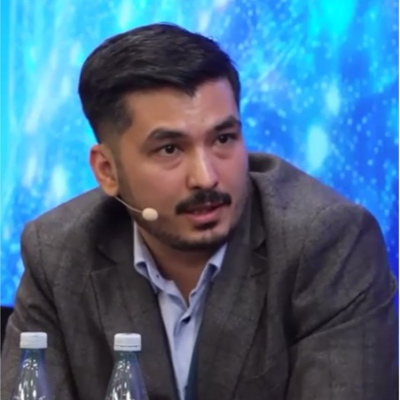
Khaled Alizai
Head of AI Assessment Danske Bank
As financial institutions accelerate GenAI adoption, the greatest risks lie not only in the models, but in how they are applied. At Danske Bank, Khaled is leading the work on a dedicated evaluation capability to bridge technical robustness with real world deployment, aligning regulatory expectations with practical use. This session offers a first-mover perspective on AI risk management, focusing on evaluating GenAI applications, applying EU AI Act principles in practice, and enabling safe, scalable adoption of AI across operations.
Agenda Day 1
4:30 PM Closing Panel Debate – Defining the Risk Landscape: Securing Enterprise AI in 2026
Enterprise AI is already in production, but security models haven't caught up. Teams are deploying copilots, agents, and AI-powered workflows faster than organisations can define acceptable risk, leading to inconsistent decisions and growing exposure. The challenge isn't understanding every AI threat, it's deciding where to draw the line and enforcing it consistently. This panel focuses on a critical question: how do organisations define and apply AI risk boundaries in practice, across data use, model behaviour, and autonomy, without slowing down delivery?
Agenda Day 2
9:15 AM Chair's Opening Remarks
9:30 AM Opening Panel Discussion – Shadow AI: The Unseen Attack Surface
The term "Shadow AI" is used everywhere, but often without precision. It is not just unsanctioned use of public tools. It spans a spectrum, from casual employee usage to internally built applications calling external model APIs, to semi-approved experiments that never pass through full governance. Some of it is visible, some of it is tolerated, and some of it is completely unknown. What matters is not the label but the condition: AI capability operating without clear oversight, consistent controls, or full visibility. This panel focuses on making that condition manageable and on where Shadow AI actually sits in the enterprise, how to detect it in practice, and how to bring it under control without slowing delivery or relying on bans that do not work.
Check out the incredible speaker line-up to see who will be joining Khaled.
Download The Latest AgendaIn Partnership With:

QUESTIONS?
Address: IQPC Ltd, 129 Wilton Road,
London SW1V 1JZ
Telephone: 44 (0) 207 368 9300
Fax: 44 (0) 207 368 9301
Email: enquire@iqpc.co.uk

©2026 IQPC. All rights reserved.


