Agenda Day 1
Day 1 Morning Sessions
8:30 am - 9:00 am
Registration and Breakfast
9:15 am - 9:30 am
Chair's Opening Remarks
9:30 am - 10:00 am
Day 1 Opening Panel Discussion – Cyber’s New Perimeter: Securing AI Without Slowing Innovation
Alex Gomez -
Divisional CISO & Global Head of IT Security, Risk & Compliance,
The Adecco Group
Lalit Kumar - Group CISO and Principal Security Architect, Aviva
AI is reshaping where cyber responsibility begins and ends. Attacks now target prompts, models, and data flows, areas that sit outside traditional controls. As organisations move to secure AI, leaders face real trade-offs between risk reduction and speed. This opening panel surfaces where to draw the line, who owns it, and what's practical today.



10:00 am - 10:30 am
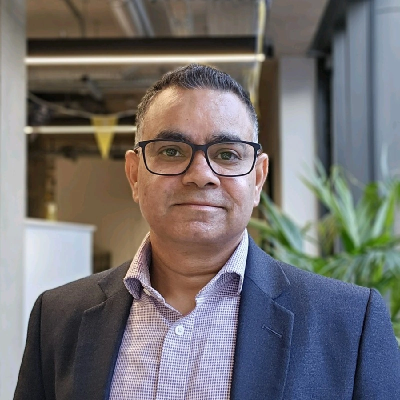
Presentation / Case Study – From Theory to Practice: Securing AI at the FCA
Alister Shepherd -
CISO,
FCA
In this session, Alister Shepherd, CISO at the FCA, shares a practical case study on moving AI security from frameworks and standards into live implementation. Drawing on the FCA's experience, he will explore how security teams can monitor, validate and strengthen AI systems once they are in production. He examines why reliability is a core security concern, not just a technical performance issue, and how failures in live models can create unseen risk if they are not identified early. He also reflects on the journey so far, including lessons learned, early challenges and how his team has adapted its approach by evolving the tooling and controls needed to secure AI systems in practice.

10:30 am - 11:30 am
Morning Networking Coffee Break
Day 1 Late Morning Sessions
11:30 am - 12:00 pm
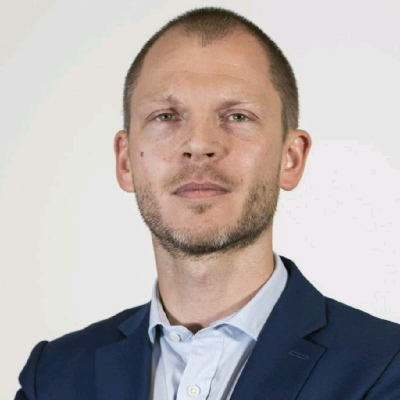
Panel Debate – Build, Buy, or Bluff? The Reality of in House AI Red Teaming
Vijay Mitra -
Head of AI and Digital Risk,
Nationwide Building Society
Luigi Renna - Director of Security Architecture, Barclays
AI dramatically expands the attack surface, yet the skills required to test these systems remain scarce. Enterprises are under pressure to build internal capability, but few understand what AI red teaming requires in practice. This debate challenges assumptions around in house readiness and exposes where maturing may be overestimated. Panellists will discuss the feasibility of building internal AI red teams, the tooling and expertise genuinely required, and where external specialists remain critical.




12:00 pm - 12:30 pm
Presentation – Securing MCP: Enforcing Trust Boundaries in Model Context Protocol
Daniyal Naeem -
Principal Security Authority - AI,
BT Group
Model Context Protocol (MCP) is rapidly becoming the backbone of agentic AI, connecting models to tools, memory, plugins, and live data. But it introduces a critical security failure: it collapses trust boundaries. Trusted system instructions, user input, and external data all merge into a single prompt the model cannot reliably interpret or defend. The result is a new, highly exploitable layer, where prompt injection, tool spoofing, and data leakage happen inside the model's execution flow, beyond the reach of traditional controls. In this session, Daniyal Naeem, Principal Security Authority-AI, at BT Group shows how to restore trust boundaries in MCP-based agent systems: separating trusted and untrusted context, validating tools and data before model exposure, and enforcing identity, permissions, isolation, and audit controls across every MCP flow.


Lunch Break
12:30 pm - 2:00 pm
Networking Lunch
Day 1 Afternoon Sessions
2:00 pm - 2:30 pm
Panel Discussion – When Everyone Can Build: Tools, Access, and Control in the Age of Open AI Integration
Gunjan Gandhi -
CTIO,
Ericsson
AI is no longer confined to central platforms. Teams can now build, connect, and deploy AI capabilities directly into workflows. Tools like Claude and Microsoft Copilot are just the starting point; open frameworks and APIs are putting real power in the hands of employees. The opportunity is speed and innovation. The risk is uncontrolled sprawl: where AI systems are built, integrated, and used without consistent oversight. This session focuses on how to enable widespread AI adoption while maintaining control over data, usage, and risk.


2:30 pm - 3:30 pm
Networking Roundtable Discussions
Join relaxed, topic-led roundtables designed to connect you with peers facing similar challenges in securing AI across the enterprise. In a no-slide, no-stage setting, each table will tackle a timely Secure AI theme. Lightly moderated to spark honest discussion, challenge assumptions, and share what's really happening on the ground.
3:30 pm - 4:00 pm
Afternoon Coffee Break
Day 1 Late Afternoon Sessions
4:00 pm - 4:30 pm
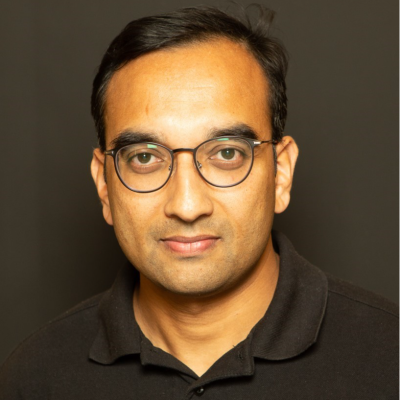
Presentation / Case Study – Securing Automotive AI: Insights into Threats, Attacks, and Defence Strategies
Sheikh Mahbub Habib -
Head of Product Cybersecurity and Privacy Innovation,
AUMOVIO
As AI scales across automotive products, the challenge is no longer building models but proving that they are secure across the entire product lifecycle. In this case study, Sheikh Mahbub Habib, Head of Product Cybersecurity and Privacy Innovation at AUMOVIO, outlines the threats and attacks in the field of AI and how those can affect the automotive products in the long run. He shows how systematically AI threats and attacks can be addressed and mitigated. The session highlights a critical industry challenge: rigorously end-to-end testing AI for safety-critical systems while meeting performance and delivery pressures, and ensuring guardrails are continuously validated to hold up in real-world conditions.

4:30 pm - 5:00 pm
Closing Panel Debate – Defining the Risk Landscape: Securing Enterprise AI in 2026
Vijay Mitra -
Head of AI and Digital Risk,
Nationwide Building Society
Alister Shepherd - CISO, FCA
Enterprise AI is already in production, but security models haven't caught up. Teams are deploying copilots, agents, and AI-powered workflows faster than organisations can define acceptable risk, leading to inconsistent decisions and growing exposure. The challenge isn't understanding every AI threat, it's deciding where to draw the line and enforcing it consistently. This panel focuses on a critical question: how do organisations define and apply AI risk boundaries in practice, across data use, model behaviour, and autonomy, without slowing down delivery?