Agenda Day 2
The agenda for the Secure AI Summit 2026 focused on the practical challenges of securing enterprise AI, co-located with the 4th annual Responsible AI Summit.
Day 2 Morning Sessions
8:30 am - 9:15 am
Breakfast and Registration
9:15 am - 9:30 am
Chair's Opening Remarks
9:30 am - 10:00 am
Opening Panel Discussion – Shadow AI: The Unseen Attack Surface
Eric Martinez Cancela -
CISO,
Serunion
Robin Schoss - Regional CISO, Olympus
The term "Shadow AI" is used everywhere, but often without precision. It is not just unsanctioned use of public tools. It spans a spectrum, from casual employee usage to internally built applications calling external model APIs, to semi-approved experiments that never pass through full governance. Some of it is visible, some of it is tolerated, and some of it is completely unknown. What matters is not the label but the condition: AI capability operating without clear oversight, consistent controls, or full visibility. This panel focuses on making that condition manageable and on where Shadow AI actually sits in the enterprise, how to detect it in practice, and how to bring it under control without slowing delivery or relying on bans that do not work.



10:00 am - 10:30 am
Presentation / Case Study – When AI Takes the Helm: Securing Maritime Products for Operations
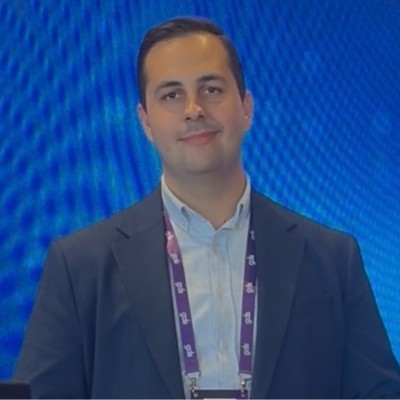
Kenneth Solberg -
Director of Product Cyber Security,
Kongsberg Maritime
AI is moving into live maritime environments where operational complexity is high and tolerance for failure is low. From decision support and route optimisation to remote and autonomous operations, maritime organisations are increasingly connecting AI models, cloud-based data flows, software components and operational technology systems. In this session, Kenneth Solberg, Director of Product Cyber Security at Kongsberg Maritime focuses on the fundamental security and assurance challenges of deploying AI in products being used in maritime operations, including reliability, human oversight, integration complexity and long system lifecycles.

11:00 am - 11:30 am
Morning Networking Coffee Break
Day 2 Late Morning Sessions
11:30 am - 12:00 pm
Panel Discussion – AI Security: Standards, Policy & EU Enforcement Reality
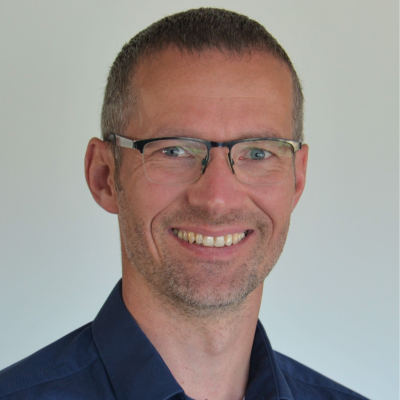
Dimitris Tsapogas -
Global Head of Privacy and Data Protection,
DHL Supply Chain
Standards for AI are moving quickly. The EU AI Act, NIST frameworks, and Cyber Resilience Act are starting to define expectations. But inside most organisations, these standards have not yet been translated into clear internal rules or enforceable controls. At the same time, agentic AI introduces systems that act, decide, and adapt in ways those standards only partially address. This panel focuses on the gap between policy and practice. It addresses how to turn emerging standards into something usable, define what is acceptable inside your organisation, and evidence control when regulators ask.

12:00 pm - 12:30 pm
Presentation / Case Study: Poisoned Pipelines: Securing AI Infrastructure Against npm Supply Chain Attacks
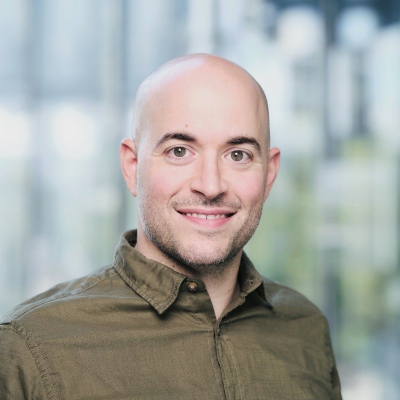
Luigi Renna -
Director of Security Architecture,
Barclays
The rush to build AI-enabled applications has created a new software supply chain risk surface, with attackers increasingly targeting the open-source ecosystems powering modern AI development. Recent npm incidents in the AI space have exposed how quickly compromised tooling can spread through developer environments and production systems. In this session, Director of Security Architecture at Barclays explores what these attacks reveal about the intersection of application security and AI security, why existing security practices are struggling to keep pace, and how organisations can better anticipate, detect, and reduce emerging supply chain threats before they scale across the enterprise.


12:30 pm - 1:00 pm
Presentation / Case Study – Securing AI Use Cases Before They Scale: Inside PMI’s AI Factory
PMI's AI Factory turns AI experiments, pilots, and proofs of concept into reusable enterprise components deployed as microservices or AI agents. In this case study, Alessandro Sardo, PMI's Director of Security Architecture & Application Security and Tobias Oplustil, Head of Responsible AI discuss the challenge of securing AI use cases as they move from pilot to production, from inconsistent controls and unclear ownership to output validation, and agent oversight. They share how PMI is embedding governance, security controls, validation, and access management into reusable AI components from the start, enabling AI adoption to scale without increasing enterprise risk.
Day 2 Lunch
1:00 pm - 2:15 pm
Networking Lunch
Day 2 Afternoon Sessions
2:15 pm - 2:45 pm
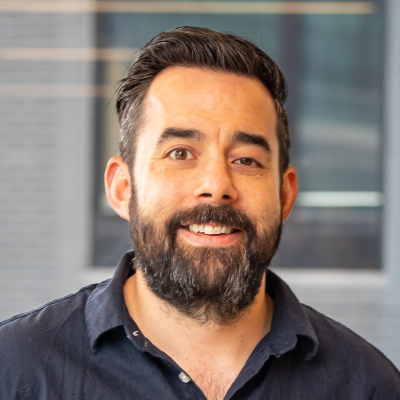
Presentation / Case Study: Securing Agentic Commerce: Inside VML’s Internal Storefront
Nick Harry -
CTO,
VML
This year VML launched an internal agentic commerce storefront designed to demonstrate secure autonomous commerce experiences for enterprise clients. In this session, Nick Harry, VML's CTO breaks down the layered reference architecture behind the platform and how security controls were implemented across each layer to make the system operationally credible. He explores what worked, what failed, and the challenges of securing non-deterministic agent behaviour in live environments.
2:45 pm - 3:30 pm
Day Two Networking Roundtable Discussions
Join relaxed topic-led roundtables designed to connect you with peers facing similar challenges in securing AI across the enterprise. In a no-slide, no-stage setting, each table will tackle a timely Secure AI theme. Lightly moderated to spark honest discussion, challenge assumptions, and share what's really happening on the ground.
3:30 pm - 4:00 pm
Afternoon Coffee Break
Day 2 Closing Sessions
4:00 pm - 4:30 pm
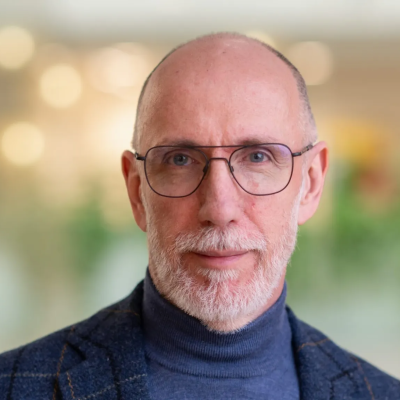
Presentation / Case Study– The Agentic Paradigm Shift: What CISOs Need to Rethink
Wim Sonnemans -
Global CISO,
Philips
Enterprise adoption of agentic AI is accelerating faster than organisations can safely operationalise it. The challenge is not the technology itself, but the mindset surrounding it. Many organisations resist "humanising" agents, while simultaneously granting them broader access than new employees would ever receive. In this session, Wim Sonnemans, Global CISO at Philips, discusses why this approach is fundamentally flawed. He argues agents should be treated more like new hires: probabilistic, trainable, supervised, and constrained by least-privilege controls from day one. He explores the paradigm shift required for agentic security governance, why over-permissioning is emerging as the defining enterprise risk, and how organisations can unlock greater value from agentic AI by redesigning segregation of duties.

4:30 pm - 5:00 pm
Closing Panel Discussion – From Threat Talk to Boardroom Buy-In: Making AI Security a Business Enabler
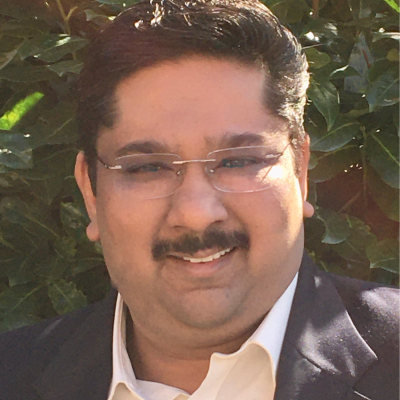
Manish Gupta -
Head of Cyber Security for Europe,
Ericsson
Dimitris Tsapogas - Global Head of Privacy and Data Protection, DHL Supply Chain
"No news is good news" has long defined security success, but AI, especially agentic systems, has changed the reality. Risk is now continuous, visible and shaped by autonomous behaviours that require constant oversight. As boards push to accelerate AI adoption, confidence depends on proving it can be done securely. This panel explores how security leaders can reposition AI security from a perceived blocker to a strategic enabler of trust, investment and business value.