Agenda Day 1
8:00 am - 8:25 am
EVENT REGISTRATION & COFFEE
8:25 am - 8:30 am
IQPC WELCOME
8:30 am - 8:40 am
OPENING REMARKS FROM THE CHAIRPERSON
8:40 am - 8:45 am
LIVE POLLING
8:45 am - 9:30 am
OPENING KEYNOTE PANEL - ROI or Die: Why your AI Strategy is Still Failing the Business Test – and How to Fix it
Frank Bernhard -
Chief Data & Analytics Officer,
Independent
Andrew Swinney - Chief Marketing and Data Officer, Leader Bank
Diego de Aragão - Senior Vice President of Balance Sheet Management & Analytics, Citi
Bipin Chadha - Senior Vice President Data Science, CSAA Insurance Group
Brian Otey - Senior Vice President of Enterprise Reporting and Data Management, City National Bank, an RBC Company
Most CDOs are stuck proving AI's value through efficiency metrics rather than revenue growth, conversion lift or customer retention – despite boards demanding tangible business impact. Cut through the hype of AI and take a longer-term AI strategy to shift from scattered PoCs to production AI that moves frontline outcomes with real before/after metrics from end-to-end use cases.
• Hear how to generate visible before/after improvements of innovative AI implementation and clearly communicate this to your wider organization and your board.
• Audit and kill weak initiatives to double down on the 20% of AI use cases that drive real growth for your organization, positioning your AI strategy as a service for frontline monetization







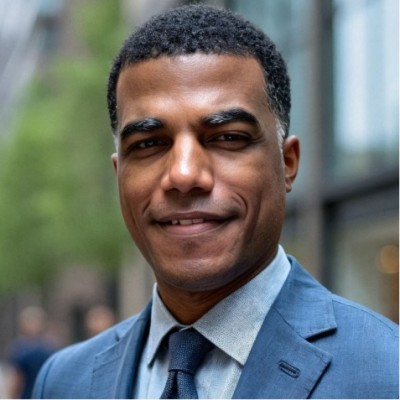
Brian Otey
Senior Vice President of Enterprise Reporting and Data ManagementCity National Bank, an RBC Company

9:30 am - 10:00 am
PRESENTATION - From Dark Data to Crown Jewels: How One Financial Institution Turned Unstructured Data into an AI-Ready Asset
Glen Day -
CEO & Founder,
NVISIONx


How can agentic AI and agent workflows be applied to enterprise risk management to automate analysis, speed reporting, and improve decision-making?). The session will focus on actionable lessons for practitioners: selecting the right problems, designing agent pipelines, demonstrating business impact, and approaches to internal advocacy.
- Share practical use cases across credit, capital markets, AML/compliance and enterprise risk mapping
- Discuss governance and KPIs for measuring value
- Surface common pitfalls (scaling, trust, legal/compliance)

Bowen Qian
Senior Vice President, Capital Market Risk Modeling & AI Development ManagerNorthern Trust

11:50 am - 12:20 pm
PRESENTATION - Good Enough to Govern: Data Quality for Gen AI Without a 3-Year Clean-Up
Shanthi Pudota -
Senior Vice President, Chief Data and Analytics Officer,
Bank of Oklahoma
Generative AI demands reliable data to power autonomous decision-making across key business processes – but waiting for perfect data quality creates a vicious cycle of stalled AI adoption and governance bottlenecks. Challenge the data perfection paralysis found in many highly regulated organizations, focusing instead on defining viable quality thresholds by use case while implementing policy-as-code, real time controls and shift-left accountability to embed quality where data originates.
• Hear how to effectively identify and define ‘fit for purpose’ data quality by business use case.
• Develop automated data validation at data entry points with risk matrices that flag quality issues before they cascade into AI hallucinations or poor decision-making.
• Eliminate central data quality bottlenecks by embedding accountability in product and operations teams through self-service monitoring dashboards and automated alerts.


12:20 pm - 12:50 pm
PRESENTATION - Building a Trusted Data Foundation for AI in Financial Services
Chris Lawless -
Field CTO,
Fivetran + dbt Labs


12:50 pm - 1:50 pm
Lunch
Lightning debates encourage quick thinking, concise expression, and active engagement. The debates are intellectual sprints, challenging you to articulate viewpoints on controversial issues effectively within tight time constraints. Vote with your feet, choose a side and defend your point of view.
2:25 pm - 2:55 pm
HOT TOPIC CASE STUDY PRESENTATION From Automation to Impact: Operationalizing at Scale While Consolidating Complexity
Janelle Rolph -
Chief Data Officer,
ST BANK
In BFSI, many organisations have automated pockets of work but still struggle to turn that automation into measurable business impact at scale. Hear about the real-world CDO journey to consolidating fragmented data, AI, and legacy estates into coherent platforms that can safely support AI agents, advanced analytics, and new operating models.
Discover practical approaches for aligning data and AI governance, architecture, and organisational design so that teams can move fast (LLMs, agentic workflows, synthetic data, embedded AI in SaaS) while still meeting regulatory expectations and avoiding "AI sprawl"


2:55 pm - 3:25 pm
PRESENTATION: Beyond Tables: Knowledge Graphs as the Spine of Modern, Adaptive AI Foundations
Gurpreet Atwal -
Chief Data Officer - Consumer and Small Business Bank,
Truist
BI-era foundations optimized for deterministic reporting don’t translate to AI’s probabilistic, context-hungry world. Knowledge graphs provide the connective tissue that turns scattered, mostly unstructured enterprise data into machine-understandable context – linking entities, events, policies and provenance so models and agents can reason safely and accurately.


A collaborative Think Tank exploring the future cost dynamics of generative AI , from tokenisation and compute costs to the practical realities of scaling AI sustainably across the enterprise. Together, the session will examine how organisations are managing and optimising AI usage, prioritising high-value use cases and balancing innovation with commercial and environmental considerations.
• Explore how token and compute costs are expected to evolve.
• Discuss practical ways to manage, ration and optimise AI usage.
• Examine which AI use cases are delivering the strongest value.
• Consider the environmental impact of scaling generative AI.


5:15 pm - 5:20 pm
Live Polls
5:20 pm - 5:50 pm
FIRESIDE CHAT - Conservative, Not Static: How to Become a Business Growth Accelerator with Progressive Exposure and Hard Counts
Bipin Chadha -
Senior Vice President Data Science,
CSAA Insurance Group
Frank Bernhard - Chief Data & Analytics Officer, Independent
Banking, Financial Services, and Insurance companies have every reason to be conservative, but they don't have to be static. Modern CDOs are finding ways to accelerate innovation safely by adopting progressive exposure patterns – a disciplined, stepwise approach to data deployment where models, insights and products are first validated in a limited, low-risk environment before being scaled wider. Thus, a pragmatic model allows CDOs to drive real, tangible impact in their organisations to prove their value and position as a key department and generate organizational respect.
• Hear how other CDOs from conservative industries have made a mindset shift from control-only postures to growth-oriented leadership.
• Discobver key governance tools that balance speed, safety and measurable value creation in progressive exposure.
• Explore frameworks for proving data-driven ROI quickly, such as 'progressiveexposure' to unlock larger budgets, credibility and organizational respect