Agenda Day 2
8:00 am - 8:30 am
EVENT REGISTRATION & COFFEE
8:30 am - 8:35 am
OPENING REMARKS FROM THE CHAIRPERSON
8:35 am - 8:40 am
LIVE POLLS
8:40 am - 9:25 am
PANEL DISCUSSION: From Hype to Habits: What an Automated, Efficient & Trustworthy BFSI Enterprise Looks Like in 2030
Frank Bernhard -
Chief Data & Analytics Officer,
Independent
Chetan Desai - Head of Data Governance and Operations, Guardian Life
Melissa Richards - Chief Data Officer, Renasant Bank
Bo Xu - SVP, Head of Data & Analytics Strategy, East West Bank
Melissa Richards - Chief Data Officer, Renasant Bank
Deepak Giri - Executive Director, Corporate & Investment Banking, Wells Fargo
The next decade will likely not belong to the loudest technology, but to the organizations that turn data, automation and intelligent systems into trusted, everyday business habits. Across a multiplicity of business functions, CDOs and their C-suite peers will shape how risk, insight and innovation coexist in a compliant, customer-centric enterprise. Peers from across Banking, Insurance and Financial Services industries will explore what the data-driven enterprise of 2030 looks like – and what cultural, architectural and leadership shifts must begin now so you don’t lag behind.
• Explore the operating models, architectures and cultural shifts that separate future data-driven leaders from those left managing yesterday’s dashboards.
• How developed will BFSI organisations be in utilizing and scaling innovative technologies, such as AI, in 2030?
• Hear how the future data team will likely construct its data stack to remain ready for future eventualities to mitigate potential risks.
• Delve into the predictions of peers on how the BFSI enterprise will operate in 2030, and what will likely matter most to boards, regulators and customers.

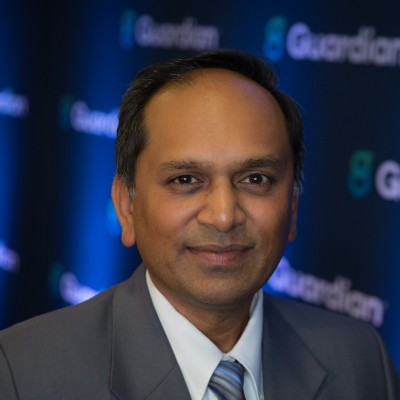









Too often AI projects stall because unstructured knowledge is fragmented or ungoverned. In this closed-door think tank we'll briefly frame the challenge, then workshop pragmatic approaches to source, curate, version and secure documents, screenshots and diagrams, mapping activities to cost/benefit levers and KPI ideas. Participants will co-create a lightweight playbook and measurable next steps to trial within 30–90 days.
11:15 am - 11:45 am
HOT TOPIC CASE STUDY PRESENTATION: Finding the Sweet Spot - Aligning Architecture, Governance and Execution to Unlock AI at Scale
Moataz Mahmoud -
SVP, Enterprise Data Management,
First-Citizens Bank & Trust Company
In large, fast-scaling financial organizations, architecture and governance can easily drift into becoming a brake on execution rather than an enabler. In this session, hear practical lessons from real-world efforts to align architecture, governance and execution to support analytics, data and AI at scale. Discuss how to:
• Build a flexible but consistent architecture that can absorb complexity from mergers and acquisitions
• Design governance programs that enable delivery rather than slow it down
• Create the foundations needed to modernize data platforms and safely unlock AI capabilities in a regulated environment


11:45 am - 12:15 pm
HOT TOPIC PRESENTATION Data Governance to AI Governance: Measuring, Controlling, and Owning Outcomes
Vinod Shenoy -
Executive Director - Conversational AI,
Morgan Stanley
Everyone Wants AI, No One Wants the Accountability but how do you Rethink Governance for the Agentic Era? As organisations rush to experiment with generative and agentic AI, many are discovering that their mature datam governance frameworks are not enough. AI introduces a different class of risk, accountability, and lifecycle challenges: it is no longer just about whether the data is good, but whether the entire AI solution continues to behave as intended—five days, five months, or five years after deployment. In this session, unpack the critical differences between data governance and AI governance, and why treating them as the same discipline leads to ownership gaps, blurred accountability, and failed scaling of promising pilots. Drawing on practical experience from building and governing AI solutions in a highly regulated environment, explore:
• Designing governance around evaluation, measurement, and continuous monitoring of AI outcomes
• Where AI governance should sit organisationally – and what happens when "everyone wants the AI but no one wants the accountability"
• Moving beyond pilots by addressing integration, tooling, and siloed experimentation
• Pragmatic steps CDOs can take to evolve from data governance to AI governance that the business can trust

12:50 pm - 1:50 pm
Lunch
2:25 pm - 2:30 pm
Live Polls
2:30 pm - 3:00 pm
HOT TOPIC PRESENTATION - Data Culture: A Journey of Change
Josh Kohr -
Chief Data Officer,
People's Bank
A candid session tracing one CDO's journey across multiple banks, from clashing data strategies and legacy tools to a more mature, human‑centered approach. Rather than focusing on technology alone, it highlights how culture, conflict, and soft skills shape data outcomes. Attendees will gain practical ideas for balancing "demolish and rebuild" vs. "work with what you have," turning detractors into partners, and designing a data roadmap that can evolve as tools, teams, and expectations change.
• Discover the real blockers to data maturity: beyond architecture and tooling into culture, incentives, and competing data strategies.
• Explore how to balance legacy platforms with future‑ready architectures— working with what you have today while quietly preparing for tomorrow's tools.
• Reimagine the CDO's role as a storyteller and coalition‑builder who can turn detractors into long‑term partners and create a resilient, product‑agnostic data roadmap.