Agentic AI Week 2026 Day One Conference: Wednesday, November 11 2026
8:00 am - 8:50 am
REGISTRATION AND COFFEE BREAK
8:50 am - 9:00 am
CHAIRS OPENING REMARKS
9:00 am - 9:30 am
KEYNOTE CASE STUDY: ALLIANCES, AUTONOMY, AND RISK - SECURING AI IN A FRAGMENTED WORLD
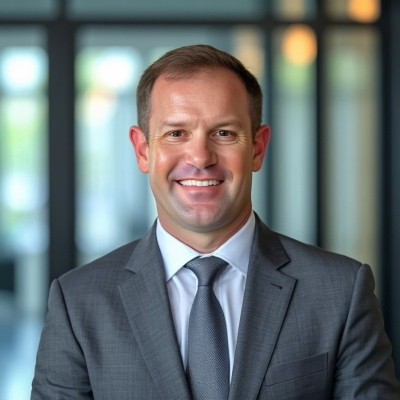
Colonel Gabe Arrington -
Chief, International Affairs,
US Air Force
As AI systems evolve from generative tools to autonomous agents, global power dynamics, security models, and cooperation frameworks are being reshaped. Nations face rising tension between rapid, industry-driven innovation and slower-moving policy and governance. In this session, Gabriel Arrington shares an inside view of how international partners are adopting AI, building joint capabilities, and navigating emerging risks, offering a grounded perspective on what secure, responsible AI looks like in today's geopolitical landscape.
• Understand how international partnerships are integrating AI into training and operations
• Navigate the growing gap between technological advancement and policy readiness
• Identify key security and geopolitical risks introduced by agentic AI systems
• Apply practical approaches to building responsible guardrails in uncertain environments

9:30 am - 10:00 am
KEYNOTE CASE STUDY: BEYOND YEAR ONE - SCALING AGENTIC AI FOR SUSTAINABLE ENTERPRISE GROWTH
We're all facing mounting pressure to improve productivity, control costs, and adapt faster in uncertain markets. Yet after initial AI deployments, many struggle with fragmented workflows, unclear ROI, and scaling challenges. This case study explores how enterprises can move from early wins to long-term agentic AI growth through stronger governance, operational alignment, and future-focused planning that enables scalable automation, measurable efficiency, and continuous innovation.
• Achieve scalable AI adoption by aligning agentic systems with business priorities
• Improve long-term ROI by establishing measurable governance frameworks
• Reduce operational friction by integrating AI across disconnected workflows
10:00 am - 10:30 am
KEYNOTE PANEL DISCUSSION: DESIGNING AUTONOMOUS WORKFLOWS - BALANCING HUMAN CONTROL AND AGENTIC EXECUTION
Nalin Aggarwal -
Corporate Vice President, Data Science,
New York Life Insurance Company
As organizations adopt agentic AI, they face the challenge of redesigning workflows for autonomy while maintaining control, accountability, and performance. Many struggle to determine where human involvement adds value versus where it slows execution. In this panel discussion, we'll explore how to map, assess, and redesign enterprise workflows for agent-driven execution, identifying where automation is viable and how to structure human-agent collaboration effectively.
• Identify workflows best suited for full agent execution to enable scalable autonomy
• Remove unnecessary human intervention from repeatable processes to improve efficiency
• Define clear human roles in exception handling to strengthen governance and control
• Redesign processes for agent-driven execution to support operational readiness at scale


10:30 am - 11:00 am
MORNING COFFEE BREAK
TRACK A: PROCESS REINVENTION
11:10 am - 11:40 am PANEL DISCUSSION: BEYOND EFFICIENCY - BUILDING ADAPTIVE, DATA-DRIVEN OPERATIONS Destiny Spears - Enterprise Leader of Emerging Technology (AI, Automation, Agentic, M/L), Shaw IndustriesBusiness leaders are under constant pressure to grow revenue, improve productivity, and reduce costs, yet many organizations still operate without clear visibility into how work actually gets done. This lack of transparency leads to inefficiencies, duplication, and missed opportunities for automation. AI-driven process intelligence changes this by continuously analysing real work activity to uncover friction points, streamline workflows, and guide smarter operational decisions. By combining process insight with real-time data, organizations can move from reactive improvement to proactive optimization at scale.
• Identify inefficiencies by using AI-driven process intelligence to analyse real work execution
• Improve decision-making by leveraging real-time operational data across teams and systems
• Scale efficiency by embedding AI tools into end-to-end process optimization efforts

Destiny Spears
Enterprise Leader of Emerging Technology (AI, Automation, Agentic, M/L)Shaw Industries

TRACK A: PROCESS REINVENTION
11:30 am - 12:00 pm CASE STUDY: FROM KNOWLEDGE OVERLOAD TO AUTONOMOUS INSIGHTS - AGENTIC AI IN ACTION AT ROCKWELL Corey Citraro - Global Leader, AI Engineering — Integrated Supply Chain, Rockwell Automationknowledge and brittle reporting systems that slow decisions. This session explores how Rockwell is tackling both with agentic AI, deploying agents that turn unstructured content into instant, trusted answers and replace complex business intelligence pipelines with autonomous reporting and anomaly detection. The result: faster access to insight, dramatically reduced manual effort, and a shift toward higher-value, AI-augmented work.
• Turn scattered documents into a searchable, AI-powered knowledge layer without replatforming
• Replace fragile reporting pipelines with autonomous, AI-generated insights and narratives
• Detect anomalies and surface risks earlier using agent-driven analytics
• Design agents that integrate with existing systems like SharePoint and BI tools
• Drive adoption by shifting teams from manual processing to insight-driven decision-making


TRACK A: PROCESS REINVENTION
12:00 pm - 12:30 pm CASE STUDY: FROM SPREADSHEETS TO SELF-DRIVING FINANCE - AGENTIC AI IN CONSTRUCTION Robin Patra - Director, Data, Analytics & AI, ARCO Construction Company Inc

TRACK A: PROCESS REINVENTION
12:30 pm - 1:00 pm AGENTIC COMMERCE - HOW AI AGENTS ARE CHANGING PAYMENTS AND SHOPPING MuQing Huang - Director, Agentic Commerce - NAM Digital Payments | Product Management, Mastercard
MuQing Huang
Director, Agentic Commerce - NAM Digital Payments | Product ManagementMastercard

TRACK B: BUILDING TRUST & IDENTITY
11:00 am - 11:30 am GUARDRAILS, GOVERNANCE, AND THE AI CONTROL GAP: HOW TO MANAGE AI GOVERNANCE Kezia Opie - Vice President, Technology Vendor Management, JPMorganChaseAI adoption has outpaced organizational control. While experimentation accelerates, governance, accountability, and oversight often lag behind, creating a growing risk gap. This session explores why governance is becoming the next critical AI battleground and what happens when guardrails are unclear, inconsistent, or retrofitted too late. It focuses on how leaders can design governance that enables innovation while protecting trust, compliance, and long-term scalability.
• Identify governance gaps that emerge when AI is deployed without clear oversight
• Design guardrails that enable safe experimentation rather than block innovation
• Improve trust by clarifying data, access, and usage boundaries across the organization


TRACK B: BUILDING TRUST & IDENTITY
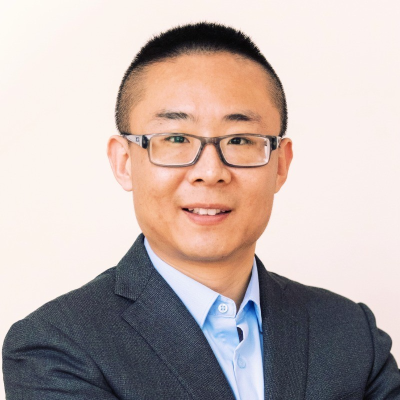
11:30 am - 12:00 pm PANEL DISCUSSION: TRUST BEFORE AUTONOMY - WHY AGENTIC AI STALLS IN THE REAL WORLD Rajesh Janu - Director Agentic Trust, Mastercard Inc.Zihao Wang - Senior Agentic AI Data Scientist, Equifax
As organizations move from pilot to production with agentic AI, many initiatives stall not due to technical limitations, but a lack of trust in autonomous decision-making. Unclear risk boundaries, inconsistent validation, and limited transparency prevent scale. This panel explores why trust is the foundational constraint to autonomy and how organisations can design systems, governance, and operating models that enable confidence in agentic execution while maintaining control and accountability.
• Identify trust gaps that prevent agentic AI from scaling beyond pilots
• Design governance models that enable safe autonomous decision-making
• Build transparency mechanisms to support confidence in AI-driven actions
• Align risk thresholds with levels of workflow autonomy



TRACK B: BUILDING TRUST & IDENTITY
12:00 pm - 1:00 pm INTERACTIVE DISCUSSION GROUP: DESIGNING A STRATEGIC FRAMEWORK FOR AGENTIC AI AT SCALE Jon Atienza - Global Director, Automation, The Coca-Cola CompanyThe challenge is no longer whether AI can act, but whether organizations are willing to let it. In this interactive session, attendees will explore how to create a framework to intentionally redesign your operating model for agentic AI, embedding it into workflows, decision paths, and governance so autonomy can safely expand across the enterprise.
• Identify where trust breaks down across autonomous workflows and decision chains
• Build lightweight, continuous validation loops instead of static governance checkpoints
• Embed transparency into agent behavior so oversight becomes scalable, not manual
• Create an agentic strategy that supports ROI from AI at scale


1:00 pm - 2:00 pm
NETWORKING LUNCH
2:00 pm - 2:30 pm
KEYNOTE CASE STUDY: MAKING AI IMPACT REAL - MEASURING, GOVERNING, AND SCALING VALUE IN THE ENTERPRISE
Mitch Gunnels -
Agentic AI Foundry – Enterprise, Mid-Market & SMB Technology,
AT&T


2:30 pm - 3:00 pm
KEYNOTE CASE STUDY: OPERATING AT THE EDGE: SCALING AI INFERENCE FOR ENTERPRISE IMPACT
Jim Masessa -
Emerging Technology Research Strategist,
Vanguard
Andrew Rozniakowski - Product Architect, Vanguard




3:00 pm - 3:30 pm
KEYNOTE PANEL DISCUSSION: BUILDING AI SYSTEMS, TEAMS, AND OPERATING MODELS FOR ENTERPRISE SCALE
Maria Latushkin -
Group Vice President, Technology & Engineering,
Albertsons Companies
Habeib Al-Hashimi - Technology & Digital Transformation Director, Project Management Office, Noble Corporation



Habeib Al-Hashimi
Technology & Digital Transformation Director, Project Management OfficeNoble Corporation

3:30 pm - 5:00 pm
NETWORKING BREAK
4:00 pm - 5:00 pm
INDUSTRY ROUNDTABLES: THE BIGGEST BARRIER TO AGENTIC AI IS NOT TECHNOLOGY, IT IS LEGACY ENTERPRISE OPERATING MODELS
You will have 60 minutes to discuss this topic amongst your industry peers. Don't be afraid to spark an interesting debate!
Industry options:
BFSI
HEALTHCARE & LIFE SCIENCES
CONSUMER GOODS
ENERGY & UTILITIES
TECHNOLOGY